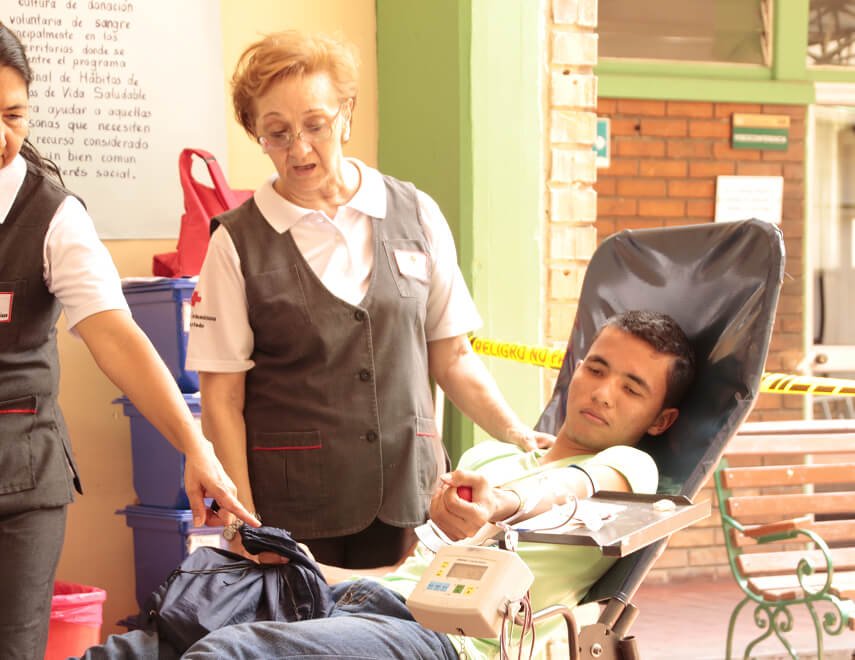
Donate Blood, Save Lives
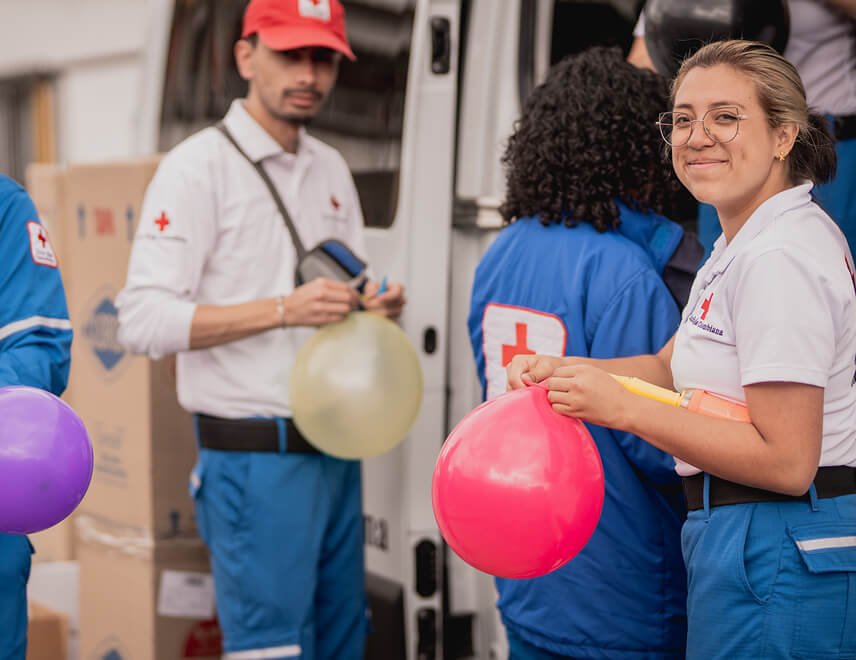
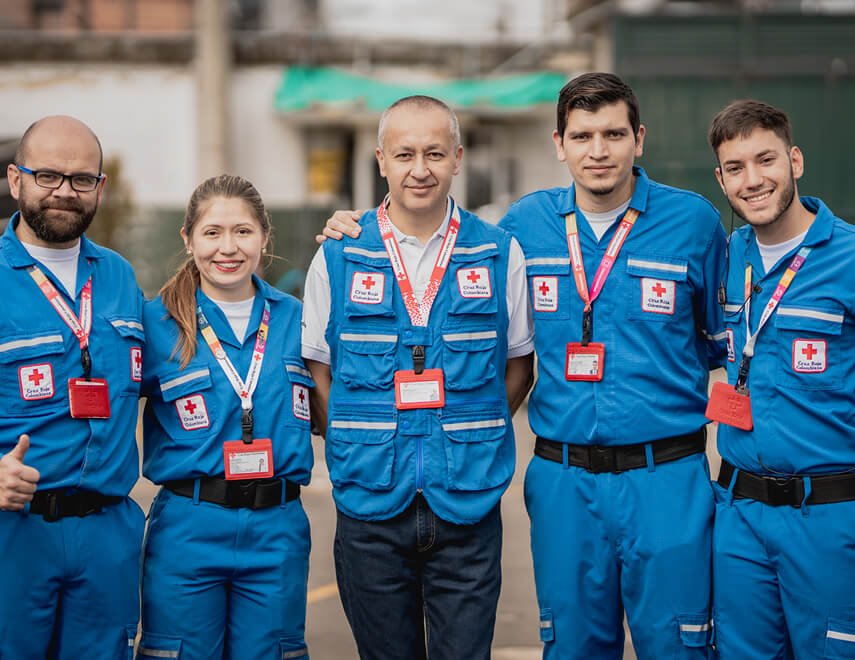
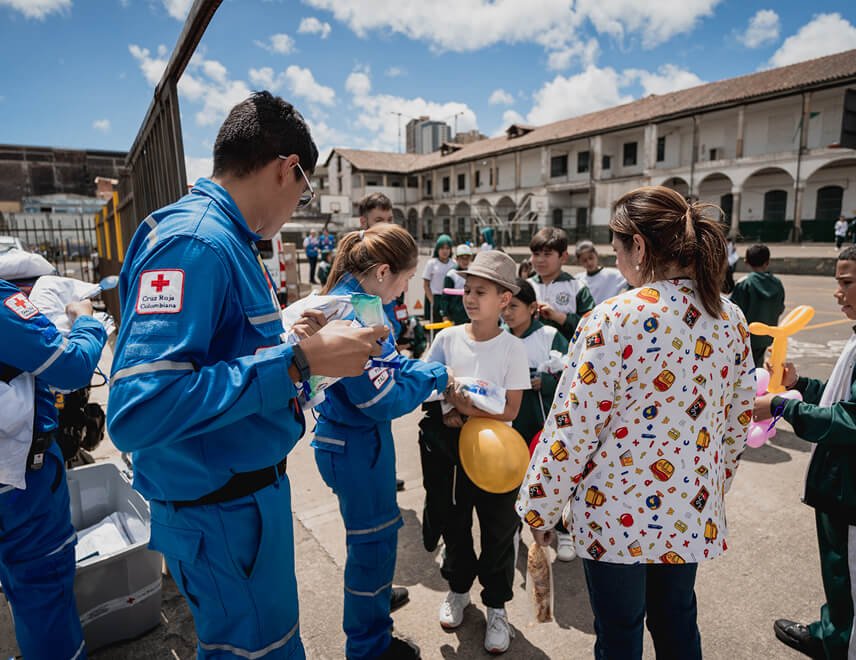
Volunteering, as a fundamental basis of our institution, works in a disciplined, loyal, supportive, and selfless manner, focusing its actions on fulfilling the humanitarian mission of the Colombian Red Cross.
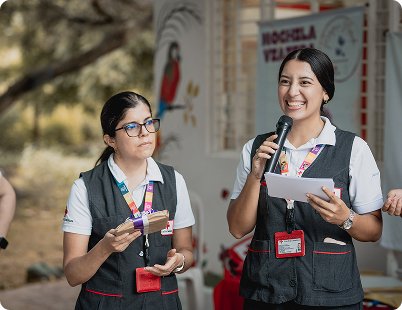
Our purpose is to support the institutional programs developed by different volunteer groups (Grey Ladies, Youth, and First Aid), focused on strengthening, promoting well-being, providing support, ensuring safety, and offering ongoing training to our volunteers so they can carry out their humanitarian work in a relevant, sufficient, and competent manner.

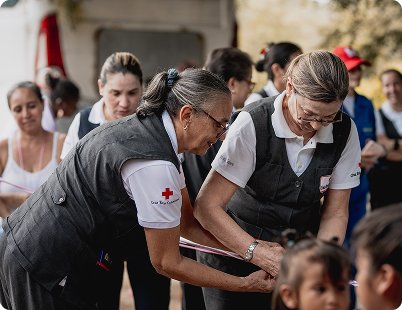
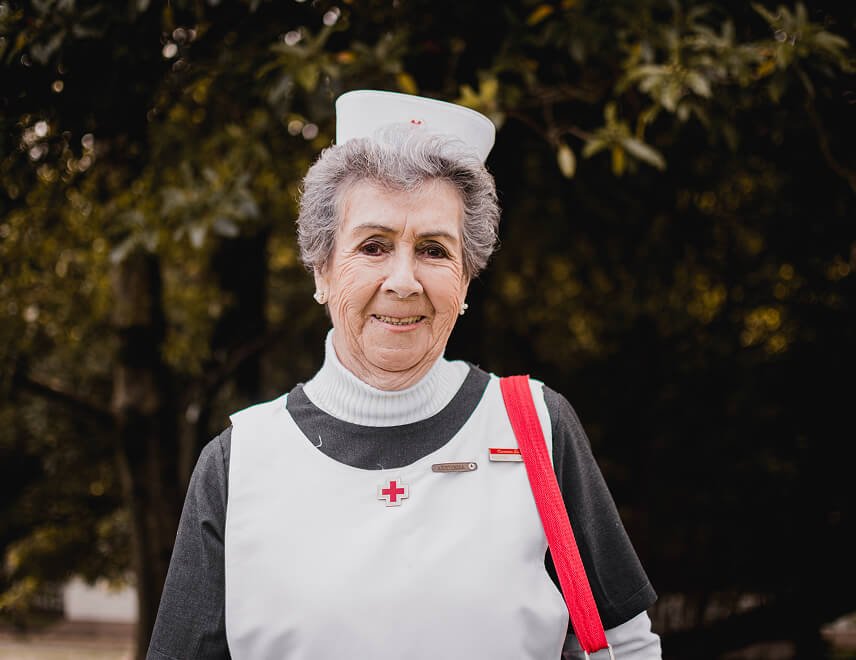
The voluntary group Las Damas Grises is made up of people over the age of 18, with a defined occupation, a great deal of sensitivity, charisma, responsibility, and ethics, with a vocation for service and leadership skills.
The Damas Grises (Grey Ladies) have been part of the Colombian Red Cross Volunteer Corps since its establishment in 1962. They support all of the institution’s humanitarian work by responding to the needs of the country’s most vulnerable communities.
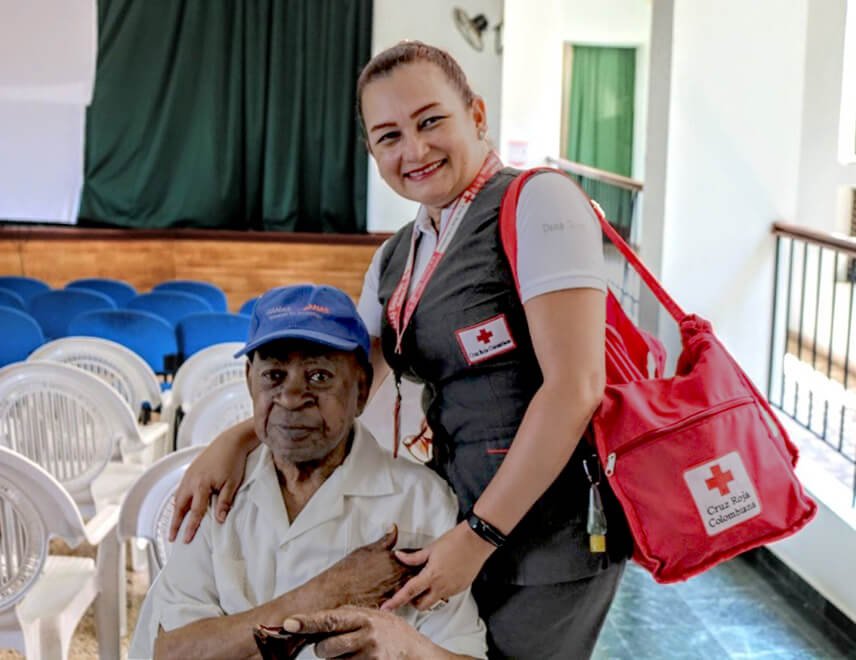
They focus their work especially on community development processes aimed at improving the quality of life and capacities of the most vulnerable communities, as well as supporting and caring for older adults.


It boosts self esteem among older adults so that they can adopt a positive outlook on life through meaningful employment.
It seeks to promote development and resilience by identifying and strengthening the capacities of vulnerable communities in urban and rural areas.
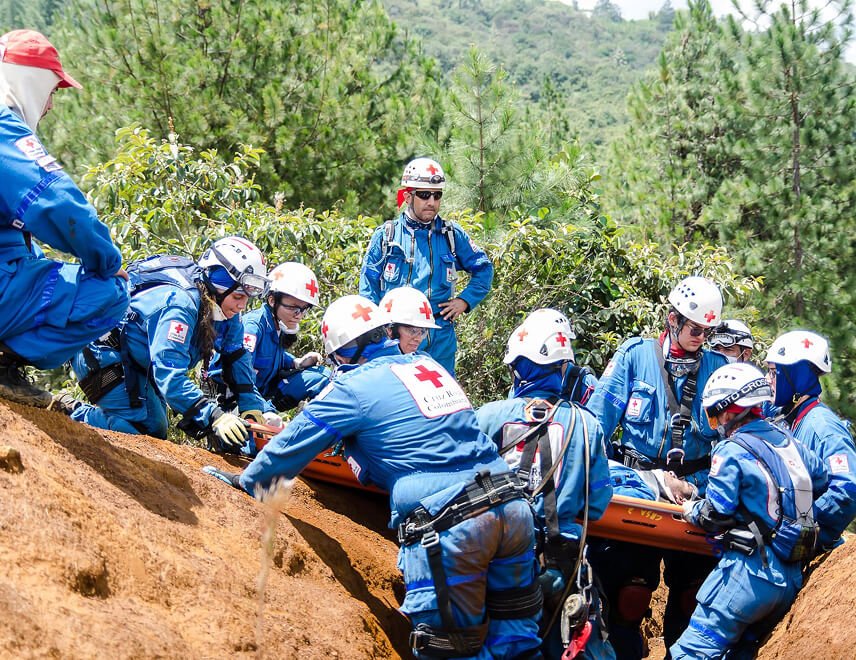
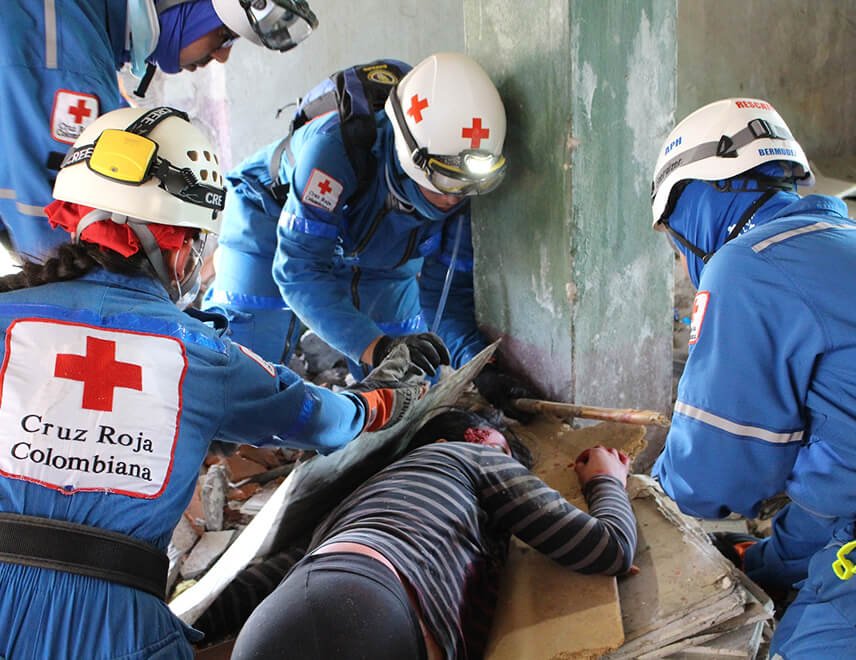
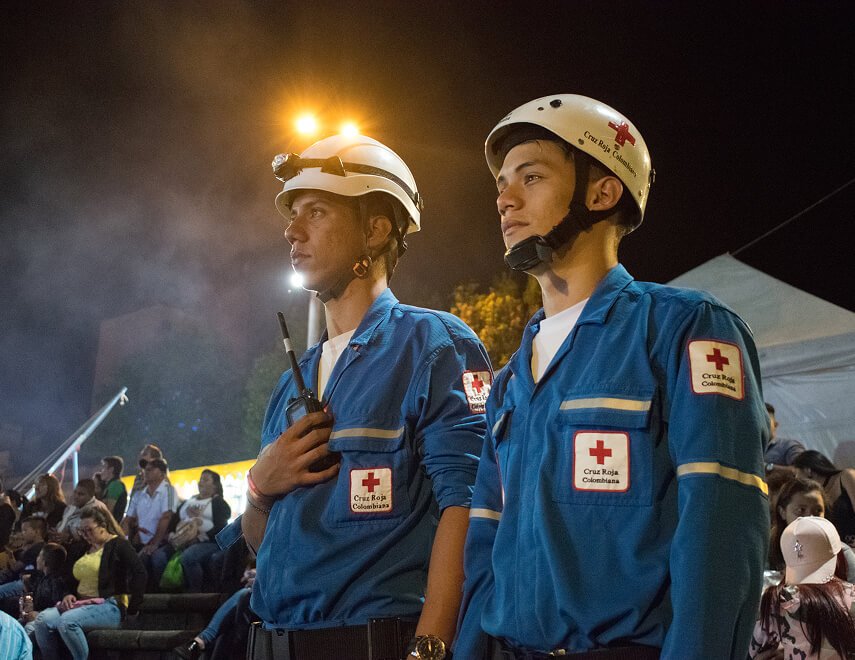
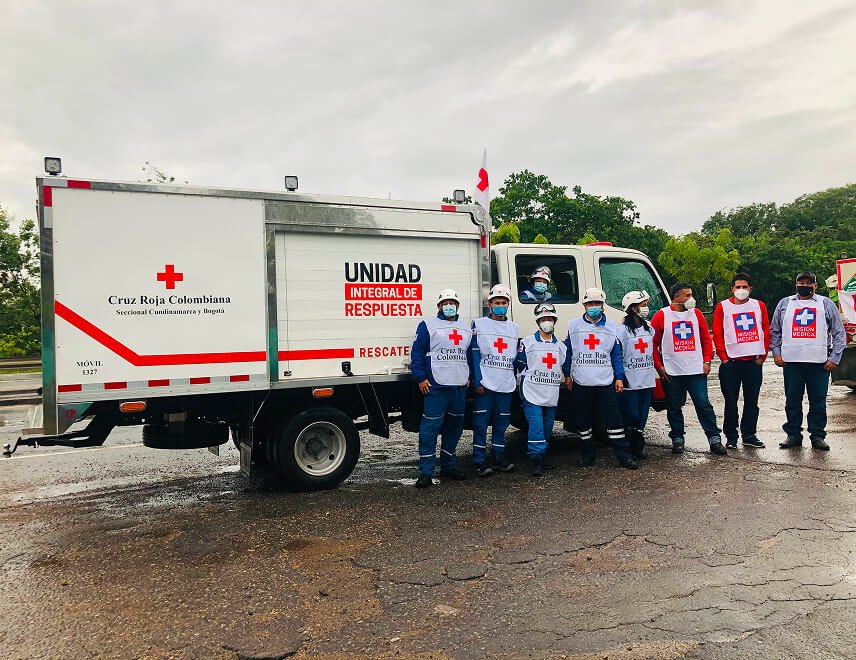
The First Aid Group is a national volunteer group that forms part of the Colombian Red Cross National Society. It was established by Law 49 of 1948 and regulated by Decree No. 4231, with the aim of providing assistance in emergencies.
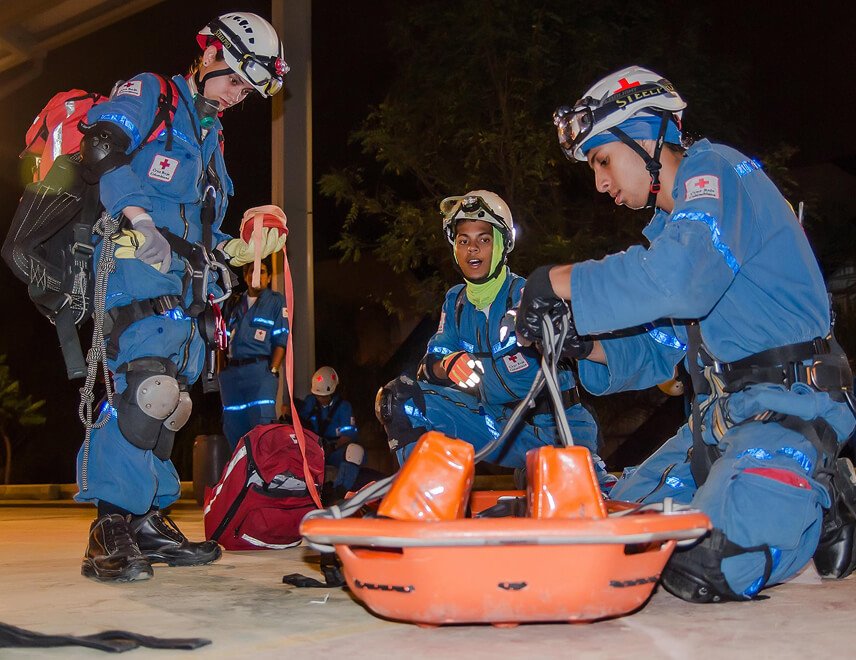
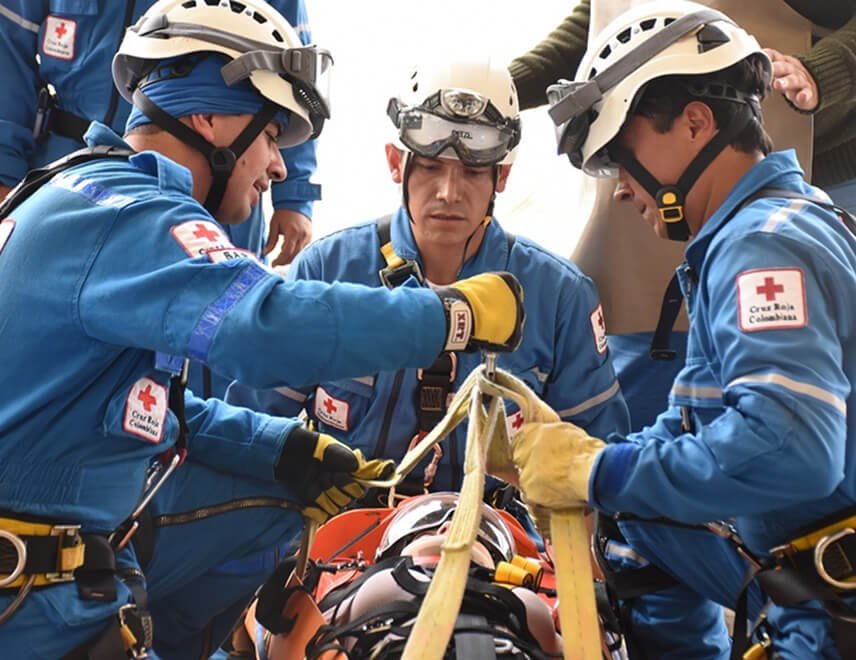
Made up of adult men and women committed to the institutional philosophy and a strong sense of solidarity, who carry out operational actions in the country in health care, search and rescue in emergencies and disasters. It supports the dissemination of institutional doctrine, international humanitarian law, and peaceful conflict transformation. It has Road Safety and Search and Rescue (SAR) programs, with its K-SAR, M-SAR, W-SAR specialties, and the U-SAR project.
During these 70 years of service, Colombian Red Cross first responders have been present at various national and international disasters, such as: the Avianca building fire in 1975, the takeover of the Dominican Republic Embassy in 1980, the tsunami in Tumaco in 1979, the Popayán earthquake in 1983, the siege of the Palace of Justice and the Armero mudslide in 1985, among others.


A specialized component of the search and rescue program in aquatic environments. Volunteers in this specialty are trained to carry out prevention, monitoring, and rescue activities in aquatic environments, including confined waters (pools and lakes), whitewater (rivers), and open waters (the sea). Search and rescue operations are conducted based on environmental conditions and the capabilities of the personnel.
A specialized component of the search and rescue program involving teams composed of pairs (handler and dog) for emergency response operations. Its primary objective is to provide volunteers with the necessary knowledge and skills required to train a dog to search for living persons in rural or urban areas.
A specialized component of the search and rescue program, aimed at prevention and response at the regional and national levels to various types of incidents and emergency situations in mountainous areas. The regional chapters in Boyacá, Caldas, Cauca, Nariño, Quindío, Tolima, and Valle have fully implemented this program.
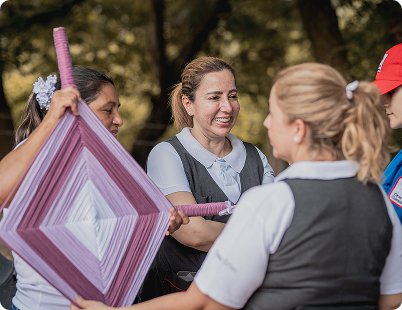
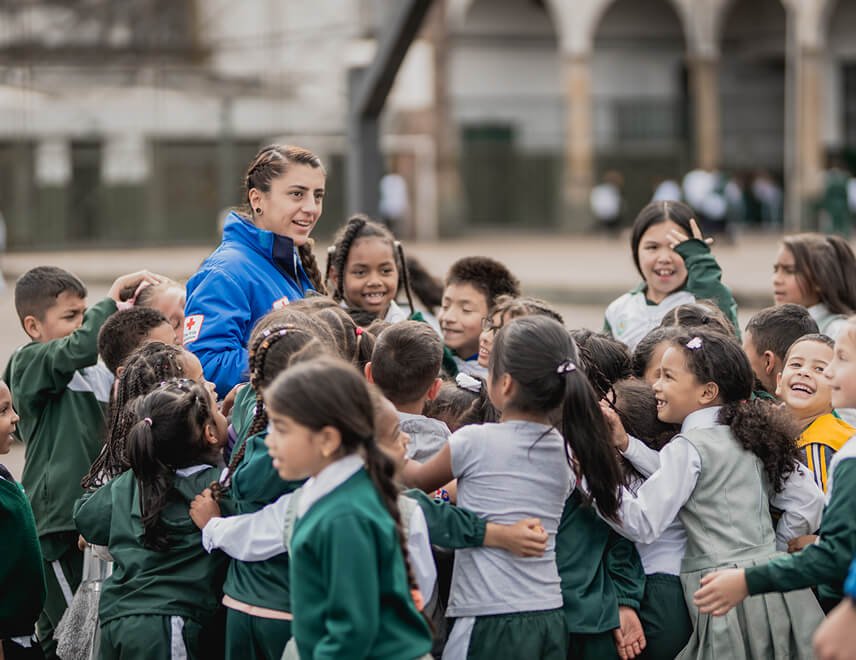
The Youth Group of the Colombian Red Cross is a space for young people, a meeting point for children, adolescents, and young adults around humanitarian action and the opportunity to play a role as a young volunteer, leader, or receive assistance from the Red Cross as a member of the community, making the group the most prominent seedbed for volunteering.
The participation of young people in the Colombian Red Cross takes place through the following lines:


Prevention and support program for children and youth in high-risk communities. It helps mitigate individual, family, and community risk factors among children, adolescents, and youth who are living on the streets or are at high risk.
It encourages children to shape their life plans around solidarity and prevention through educational and experiential learning processes based on the Movement’s principles.
A volunteer program that organizes fun, recreational, and educational activities for children, promoting learning, inclusion, and well-being through play.
It promotes inclusion, the development of values, tolerance, respect, dialogue, non-discrimination, the prevention of violence, collaborative problem-solving, and the peaceful resolution of conflicts throughout the community
A volunteer program that promotes educational and recreational activities in natural settings, fostering skills, teamwork, leadership, and values in children and young people through outdoor learning.
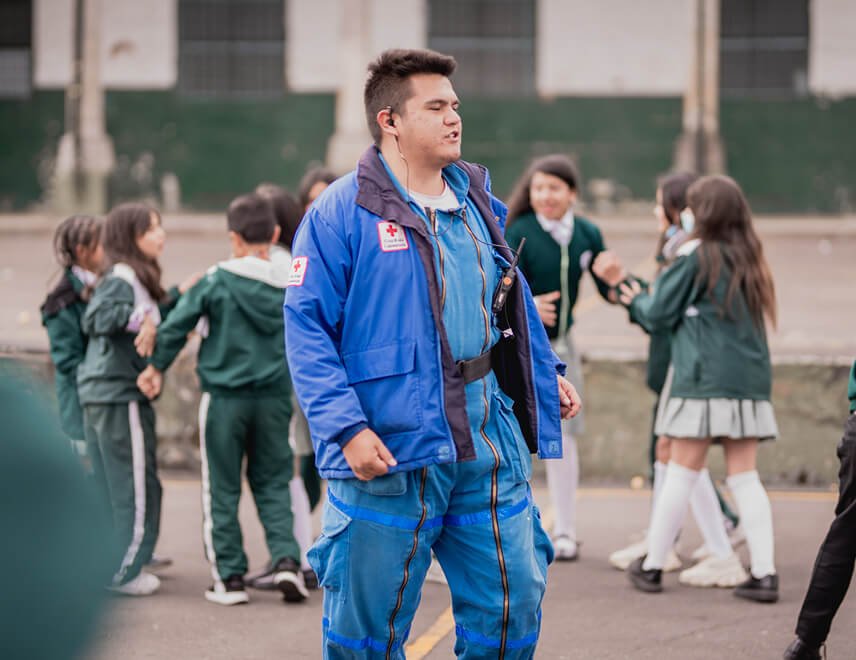
It consists of Educational Brigades and Social Service. It is a platform for promoting humanitarian initiatives within the educational community of public and private institutions. This program is further divided into:
Volunteering also changes your life
The Colombian Red Cross has the National Volunteer Fund, a solidarity and welfare fund for volunteers, whose resources are used to finance activities for their development and strengthening in the institution’s humanitarian work.
The International Red Cross and Red Crescent Movement is the world’s largest humanitarian network, with a presence in more than 190 countries and 97 million volunteers, partners, and staff members.
In international humanitarian law (IHL), human rights (HR), leadership, project management, first aid, disaster management, livelihoods, community development, teaching techniques, among other topics relevant to the country’s needs.
and local, national, or international exchanges with other National Red Cross and Red Crescent Societies.
such as National Volunteer Meetings, where volunteers from across the country come together to participate in activities that allow them to contribute to institutional change, attend academic events, network with volunteers from other branches, and receive recognition for their volunteer work.
in institutional decision-making and hold positions of responsibility within the institution.