We work to improve health and prevent disease in the most vulnerable communities. Our work focuses on providing high-quality primary health care.

The Colombian Red Cross’s Comprehensive Health Management Team contributes to maintaining and improving health and preventing disease in the country’s most vulnerable communities by developing strategies such as primary health care that meet the highest quality standards and adhere to the Fundamental Principles of Impartiality, Neutrality, and Humanity.
The Health Services Delivery Management program works to ensure access, quality, and efficiency in health care, in compliance with national and international regulations, and in support of the Colombian Red Cross’s humanitarian mission in both emergency situations and routine care.
Its purpose is to maintain quality standards and promote continuous improvement in order to provide safe services, strengthen local capacities, and consolidate integrated care networks, positioning the Red Cross as a humanitarian leader in health.
This initiative helps promote healthy living, disease prevention, and high-quality primary health care.
We implement international standards for the organization and operation of medical teams as a strategy for providing healthcare in emergency and disaster situations both domestically and internationally.
We provide pre-hospital care, early detection, targeted protection, and primary health care through integrated service networks across the country, facilitating access for the uninsured poor and vulnerable populations.
We manage health records and information to ensure the proper handling of user and beneficiary data, reporting on health service delivery indicators and information related to public health events in accordance with institutional procedures and the general social security system.
We ensure compliance with national and international standards for the provision of health services within the framework of health insurance, as well as in emergency or disaster situations, thereby promoting the accessibility and continuity of health services.
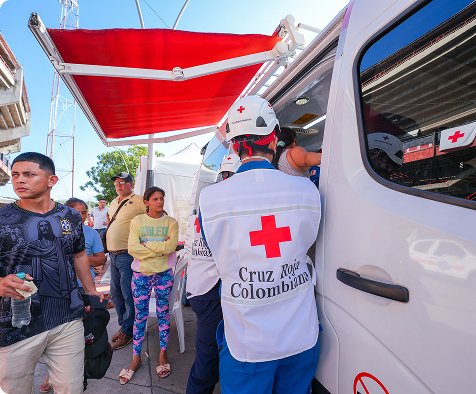
The Medical Mission program aims to reduce the institutional and individual vulnerability of health sector personnel to the risk of being affected by acts of aggression and attacks against them in situations or areas of high vulnerability due to armed conflict or other situations of violence. It is implemented in collaboration with local authorities, health personnel, the community, and armed groups through the promotion of respect for and protection of the components of the Medical Mission established in Resolution 4481 of 2012.
In addition to the existing regulatory framework in Colombia, the Red Cross Movement takes into account key components that guide the program’s actions, namely: knowledge management, risk reduction management, and the handling of violations and incidents.
The Medical Mission program aims to reduce the institutional and individual vulnerability of health sector personnel to the risk of being affected by acts of aggression and attacks against them in situations or areas of high vulnerability due to armed conflict or other situations of violence. It is implemented in collaboration with local authorities, health personnel, the community, and armed groups through the promotion of respect for and protection of the components of the Medical Mission established in Resolution 4481 of 2012.
It encompasses the actions and strategies that enable the identification of threats to the components of the Medical Mission, with a view to identifying further measures to mitigate their impact and to disseminate policies and regulations related to duties, rights, international humanitarian law, and human rights, among others, targeting both the Mission’s beneficiaries and the institutions responsible for their protection.
Through the institutional mobilization of our GAPS and the cross-sectoral coordination taking place within the various regional and national Medical Mission committees, response mechanisms are activated to address issues affecting the Medical Mission.
This refers to measures taken to reduce the likelihood of harm to individuals, vehicles, institutions, and the activities carried out by the Medical Mission in situations and areas affected by armed conflict and other forms of violence. It includes the use of distinctive emblems.
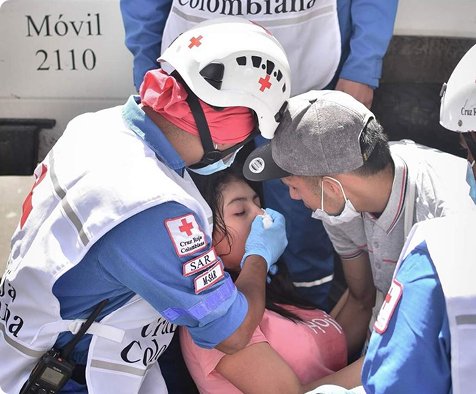
The Colombian Red Cross works to prevent and alleviate human suffering by protecting the human dignity of the most vulnerable people in all circumstances, particularly those affected by emergencies and disasters. We carry out our work through volunteers from psychosocial support groups (GAPS) and psychology professionals, with the aim of building resilient families and communities capable of promoting a culture of peace and ensuring the psychological well-being of response team members who carry out humanitarian actions with communities.
This program contains 5 subprograms:
Generating new knowledge to inform the development of policies and strategies by the Colombian Red Cross National Society related to mental health and psychosocial support.
Using our tools and volunteers, we carry out the initial psychosocial intervention for individuals or communities facing any situation that poses a risk to mental health. Using our tools and volunteers, we carry out the initial psychosocial intervention for individuals or communities facing any situation that poses a risk to mental health.
Developing action plans with vulnerable communities to improve their quality of life and strengthen community efforts.
Psychosocial support to ensure the well-being of our beneficiaries during the planning, implementation, and recovery phases of humanitarian operations.
Assessment of psychological distress, support for coping with the loss of property and loved ones, identification of bodies, an action plan for recovery, and the building of resilient communities.
Interventions focusing on sexual violence and a gender-based approach, support for family members of missing persons, forced displacement, combat injuries, and support for healthcare workers affected by various forms of violence, among others.
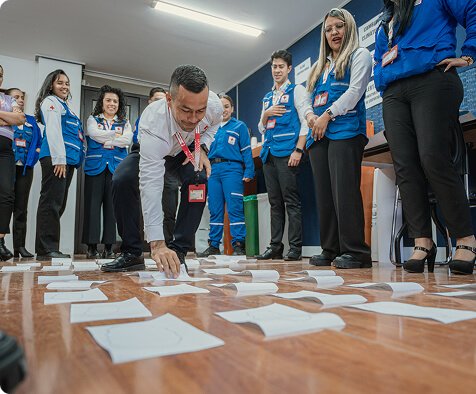
The Colombian Red Cross, in accordance with the Fundamental Principles of the Movement and its mission, has developed the Public Health and Health in Emergencies and Disasters program, which is designed to provide comprehensive care through preventive health measures in all circumstances, targeting vulnerable populations.
It is based on the priorities outlined in the Ten-Year Public Health Plan and includes initiatives aimed at:
We help provide access to safe drinking water, manage basic sanitation, and promote hygiene in vulnerable communities or those affected by emergencies and disasters, in order to reduce the risk of diseases related to water, food, habits, and the environment.
To contribute to maintaining health and preventing disease in the most vulnerable communities by improving housing conditions and family and community environments, promoting healthy habits that help reduce morbidity from communicable, chronic, and noncommunicable diseases, and encouraging social mobilization and community participation.
We implement measures to manage public health risks arising from human-induced or natural events, strengthening response capabilities in community health, first aid, and pre-hospital care—both domestically and internationally—while adopting global strategies such as EMT/MEC, disaster-resilient hospitals, and epidemic control.
Through community campaigns and strategies, we implement initiatives that promote the right to sexual and reproductive health, taking into account gender and ethnic differences, respecting diversity, recognizing sexual and reproductive rights, and ensuring that these rights are exercised responsibly, while providing referrals to health services.
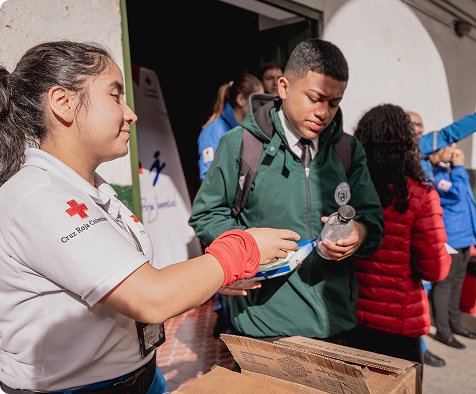
At the Colombian Red Cross, we want to be close to you, especially when you feel anxiety, sadness, or stress. Additionally, if you have any concerns or complaints about our services, this space is open to listen and help you.